
Tag Archives: task ideas

Freeganism: A Lesson Plan

Note: this article was written and first published online by out dear friend and colleague,  ‘Teacher Dude’, on his blog: http://teacherdudebbq.blogspot.gr

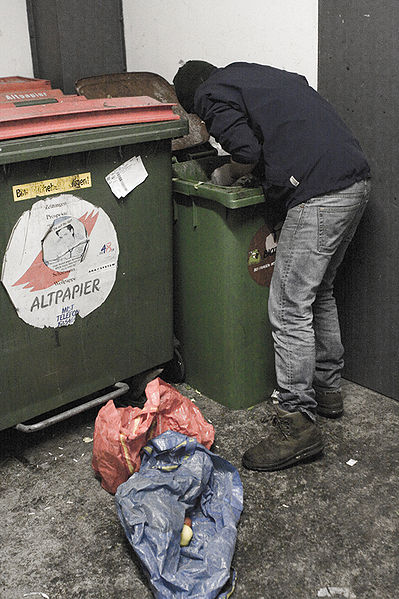
I once came across an article about ‘Freeganism’. It was titled “One Person’s Dumpster Is Another’s Diner” and was written by Becca Tucker, and posted on AlterNet on March 21, 2007. The article begins: “A subculture of people make a statement by living off the waste of millions.” For three days, a reporter gave it a dumpster-diving go in the “freegan” paradise of Manhattan.” I thought that it would make for an interesting lesson. As the article is quite long and complex this would be best done by advanced students.

The link to the article maybe found here: http://www.alternet.org/story/49547

Continue reading

More Thinking About Using A Song

Note: This article was written by our dear colleague & friend, Steve Vassilakopoulos.

In my previous post, I discussed how and why to use songs in the classroom, but my main focus was how the lyrics in a song can be exploited. However, there are, as the old saying goes, many ways to skin to a cat. If we go beyond the words a song contains and think about the music that a song contains, there are fertile pastures to be found there. In this article, I will explore two such ways of doing this, but having said that, there are numerous others as well.

The first use that we will look at is the use of music as context for narrative writing. And “what do you mean by that?” I hear you asking. Well, using music as context means providing music as inspiration to stimulate the imagination, lubricate the gray cells and get the old creative juices flowing. In practical terms it involves putting on a piece of music, setting a task for the students and then getting on with the feedback.

Continue reading

Thinking About Using A Song?

Note: This article was written by our deal colleague and friend, Steve Vassilakopoulos.


The aim of this article is to get you thinking. That is, thinking about the use of songs in the teaching of English. To start with, the first thing to think about is you and music. How often have you used songs? Why is this so? Are songs a regular part of your teaching repertoire? If so, why or why not? Why do you use songs anyway? Are songs a part of what you are teaching on that particular day, a part of your lesson plan so to speak or do you use them as a break from the boring but necessary material you normally use? Which songs do you choose and why? Do you choose the songs or do your students have a say in the matter?

Continue reading

Choices

Most people love choices: left or right, onwards or homewards, yes or no, combined with the trepidation of ‘what if…?’ or ‘have I made the right decision?’ This task suggestion is loosely based on a series of novels published in the UK in the mid-1980s; novels in which the reader could decide the fate of the protagonist depending on decisions made or routes chosen.

The ultimate aim of the task, the desired learner outcome, is to facilitate a working knowledge of narrative tenses, modal verbs, conditional structures and vocabulary relating to character and adventure. The desired aim of the task, however, is to promote team-working skills, communication development and to have fun, a commonly neglected word! Amalgamating the two approaches needn’t be hard work for the teacher and the end product can be made into wall posters, a school presentation or a ‘take home and keep’ novella.

Continue reading

Proficiency Exams, Teen Magazines, and Car Reviews

Here’s a look at the power of giving students a ‘real reason’ to write, and the reeling negative effects of teaching too many ‘exam classes’. Some years ago, I was working with an upper-intermediate level exam class here in Greece, composed primarily of young teenagers who would attempt to take various C1 (advanced) level exams that year, and to be honest for no good reason, except that it was a ‘certificate’ plastered bump on the way to C2 (proficiency) level exams.

Now in all actuality my role was limited as I was mainly asked by the school’s director to sit in with the class once a week and help develop their oral skills… of course, for test purposes. As I recall, the students were fairly sharp and most concerned about passing the upcoming exam, albeit less concerned about learning the language to use in any real meaningful way. Nevertheless, motivation is motivation no matter how small. As I always say, never look a gift horse in the mouth.

Continue reading