Tag Archives: psychology

Occupying The ‘Clash-Room’ By Banning Censorship In The Classroom

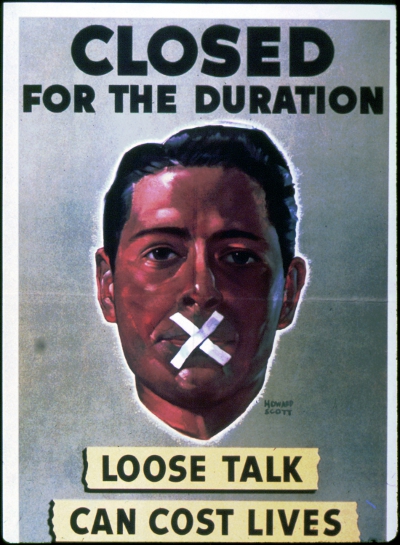
Closed For The Duration“Who is more to be pitied, a writer bound and gagged by policemen or one living in perfect freedom who has nothing more to say?”
– Kurt Vonnegut


“Fear of corrupting the mind of the younger generation is the loftiest form of cowardice.”
– Holbrook Jackson


Ask yourself the following questions:

  1. How open-minded are you?
  2. What role do you have in terms of choosing material or designing the syllabus?
  3. To what extent do you censor yourself in the classroom?
  4. What sort of topics are you most likely to censor?
  5. Who died and left you free rein to censor anything?
  6. Why are you stunting your students’ growth as individuals in society?

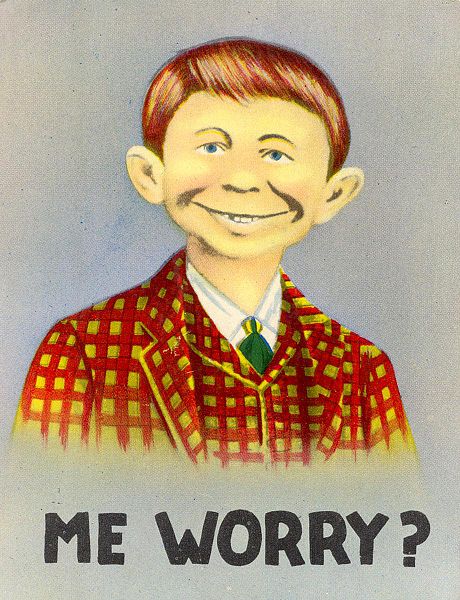
Oh, do I have your attention now? Good! Welcome to the real world and a discussion on banning censorship in the classroom, with a view towards helping you ‘occupy’ your teaching practice.
Continue reading

Survey: Teacher Attitudes To Foreign Language Anxiety

ELTvista is participating in a research project on teachers’ attitudes to a phenomenon known as ‘Foreign Language Anxiety’ (FLA) with regards to oral tasks in the classroom and on proficiency langauge exams. FLA is most often characterized as a feeling of uneasiness experienced by non-native speakers when using or learning a foreign language.

Research  studies into the circumstances of FLA has suggested it is generalizable to both a classroom form, sometime referred to Foreign Language Classroom Anxiety (FLCA). As form of performance anxiety, it is also often linked general exam anxiety.

Following the conclusion of this specific research, a series of articles will be published on this website presenting both the findings of the study. It is hoped that the conclusions of this research will shed light on and yield practical suggestions for helping teachers help their students overcome FLA.

Continue reading

Creating Losers: Rethinking Games And Competitions

Crying_babyConsider the following quotes and decide which statement is more aligned with your views of learning:

(A) “Never interrupt your enemy when he is making a mistake.” – Napoleon Bonaparte

(B) “Competition has been shown to be useful up to a certain point and no further, but cooperation, which is the thing we must strive for today, begins where competition leaves off.” – Franklin D. Roosevelt

Suffice it to say that I guess you all know where I’m going with this post! To what extent would you agree that competition is ‘healthy’ in the classroom?

Continue reading

Correcting Student Composition: Teacher Mindsets And Student Egos

As a follow-up to my last post on using correction codes, I thought it was appropriate to look at little deeper into the whole task of correcting students’ work, especially in terms of how teachers relate to doing this ‘chore’.

Having spoken to many teachers over the years, not just EFL teachers, I get the fact that probably that correcting papers, especially at home, is probably very low on the totem pole of reasons why one decides to become a teacher. Still, it is a vital function of the teacher, and moreover, one that directly impacts our students’ creative efforts. So, we should tread lightly and give some thought to our mindset when doing this.

Continue reading

On free thought, free expression and free association

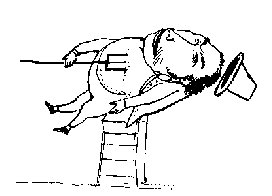
Edward Lear: A Book of NonsenseEdward Lear was a master of ‘absurdest humor’ and was especially known for his nonsense verse and limericks, the latter of which he is credited with inventing. Edward Lear was also an illustrator and, of course in every sense of the word, an artist. Art is a form of an expression. And, expression is good, for with out it we are left with only silence and ultimately we become victims of repression.

Repression, of course, can be externally imposed by institutions of a political or social nature. But self-repression is yet another ugly form of the beast. When we begin swallowing our feelings or thoughts on a regular basis, we risk adopting passive-aggressive tendencies. Overtime, pressure builds and we ultimately lash out in perhaps less than appropriate ways. When this happens, it is for our anti-social behavior that we become most remembered for, rather than our moments of reserve.

Continue reading