Tag Archives: emotional intelligence

Cracked Gift Exchange: Garbage Gifts

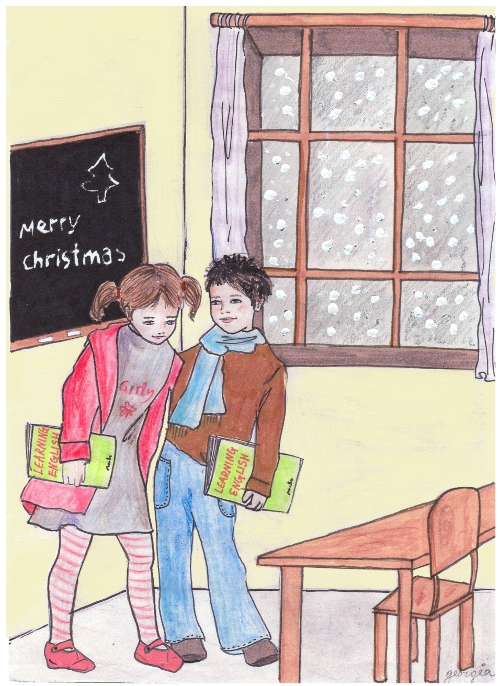
Illustration by Georgia Stylou

Ho, Ho, No!

It’s the holidays again, a time when EFL teachers go scrambling for holiday flavored gift ideas. Well, in the spirit of the season of giving, here’s an emotional intelligence laced speaking task that will also appeal to students with visual and kinesthetic learning styles.

Cracked Gift Exchange: Garbage Gifts

AIMS: Expressing gratitude, adjectives, modals (ex: can, could)
LEVEL: Elementary – Advanced
TIME: 15 minutes
MATERIALS / PREPARATION: Paper

Continue reading

Keeping Ahead Of Disruptive Behavior

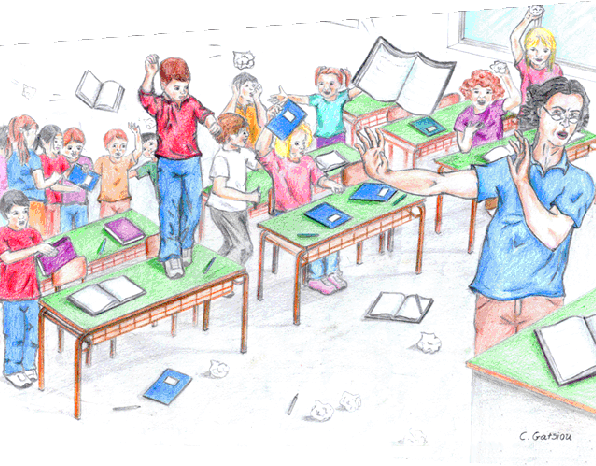
One of the jobs teachers have is to foster student participation. After all, ‘class time’ is for students to practice and produce language expression and skills. I’m sure you will agree it’s not for ‘teacher talking time’ (TTT). However, if you find yourself ‘all talked out’ at the end of a lesson, it’s useful to examine whether most of your time is spent explaining things, and how much of your time and effort is spent trying to maintain discipline and interest levels.

Continue reading

Whom Can We Trust?

AIM: Vocabulary for character traits

LEVEL: Intermediate and above

TIME: 45 minutes

MATERIALS:
Photos of people (emphasis on facial features/ langauge), Dictionaries

PREPARATION:
Photo Sources: Photos may be cut from old magazines or found on the internet. Search Google.com. Type in ‘faces’ and click on images. You will find many to choose from. If a coursebook is used, leaf through it and note down the page numbers with some photos to refer to. Try to find a good range of photos to work with depicting varying facial expressions. Using celebrities will help build interest, but try to use non-celebrities, as well.

Continue reading

Using Instrumental Music For Affect In Creative Writing

AIMS:
– To foster creative writing
– To help student brainstorm and write elements of plot, character profiles, settings, mood, etc.
– To brainstorm adjectives or other word forms

LEVEL: Elementary, Intermediate, Advanced

TIME: At least 20 minutes (depending on the amount of music played)

MATERIALS: Recorded pieces of music in a variety of musical genres

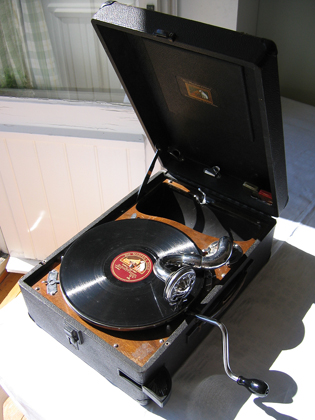
Using music to support language learning has many advantages, least of all that it supports those students who are more musical in terms of their learning style, and most of all because it makes learning fun and breaks up the monotony of regular day to day tasks.

There are many ways to use instrumental music to help students write creatively or to brainstorm vocabulary, especially adjectives and adverbs, and to help establish context. One of the easiest ways is to use pieces of instrumental music of different genres.

Continue reading

What You Think Of Me: An ‘Emotional Intelligence’ Lesson Task

What You Think Of Me: An ‘Emotional Intelligence’ Lesson Task


LEVEL: Intermediate to advanced
TIME: 15 Minutes

AIMS:
For Students: to practice giving opinions and justifications
For Teachers: to gain awareness of students’ perceptions

MATERIALS: Word List

RATIONALE:
Sometimes an effective means of getting students to take responsibility for their own behavior is to confront them with your own feelings about the teacher. Often, students don’t relate to the feelings of the teacher until they are forced to express their feelings or they are in a position to judge the teacher publicly.

The list of descriptors below are all attributes of teachers who are empathic and who exhibit high levels of self-efficacy.

Continue reading

On free thought, free expression and free association

Edward Lear: A Book of NonsenseEdward Lear was a master of ‘absurdest humor’ and was especially known for his nonsense verse and limericks, the latter of which he is credited with inventing. Edward Lear was also an illustrator and, of course in every sense of the word, an artist. Art is a form of an expression. And, expression is good, for with out it we are left with only silence and ultimately we become victims of repression.

Repression, of course, can be externally imposed by institutions of a political or social nature. But self-repression is yet another ugly form of the beast. When we begin swallowing our feelings or thoughts on a regular basis, we risk adopting passive-aggressive tendencies. Overtime, pressure builds and we ultimately lash out in perhaps less than appropriate ways. When this happens, it is for our anti-social behavior that we become most remembered for, rather than our moments of reserve.

Continue reading