Category Archives: Teacher Development

What About The Teacher? – ELT Vista

Press Release — October 2025

ELT Vista Re-established in the USA

ELT Vista, the original project that later evolved into ELT Visa, has now been re-established in the United States. The new website can be found at www.eltvista.com.

Much of the content first published through ELT-Vista periodical in the early 2000s and appearing on this website has been revised, expanded, and incorporated into the newly released book, What About the Teacher? – A Humanistic Guide to Self-Actualization for TESOL Teachers, now available on Amazon in both digital and paperback editions.

Published in September 2025, What About the Teacher? offers a reflective and non-linear exploration of teaching that blends practical TESOL methodology with the deeper human dimensions of professional growth. It emphasizes the teacher’s own development as central to the learning process—addressing not only how we teach but why.

The book carries forward the humanistic and arts-inspired spirit of the original ELT-Vista periodical while expanding its reach through new reflective sections, professional tasks, and thematic explorations of learner autonomy, identity, and self-actualization.

To learn more or to read the full article about the book, please visit the updated ELT Vista website at www.eltvista.com.

📘 Book Link: What About the Teacher? – A Humanistic Guide to Self-Actualization for TESOL Teachers on Amazon


Reposting: Truth from Fools: Polonius, Dada, and the TESOL Teacher’s Path to Authenticity

Here is a warm, intellectually engaging LinkedIn post that matches your reflective tone and explains both the article and your larger project:


What can teachers learn from hypocrites, fools, and avant-garde artists?
Quite a lot, it turns out.

In my latest article, Truth from Fools: Polonius, Dada, and the Teacher’s Path to Authenticity, I explore how inner alignment—not perfection—can be the foundation for meaningful, humanistic teaching. From Shakespeare’s famously hypocritical Polonius to the absurd sincerity of the Dadaists, I examine what it means to “be true to oneself” in a profession often overshadowed by institutional expectations and performance.

This piece is part of a broader reflection as I edit my forthcoming book on self-actualization for language teachers. It’s also a nod to my ongoing attempt to reconcile two wildly divergent parts of myself: the teacher-trainer grounded in pedagogy and the Dadaist at large who still believes in poetic license and honest contradiction. To this end, despite being TESOL related, I decided to post the article on my creative sandbox blog. More soon on the book—and, with any luck, a new Lost Florida novel. Both will be published on Amazon.
– Jay Leonard Schwartz

Occupying The ‘Clash-Room’ By Banning Censorship In The Classroom

Closed For The Duration“Who is more to be pitied, a writer bound and gagged by policemen or one living in perfect freedom who has nothing more to say?”
– Kurt Vonnegut


“Fear of corrupting the mind of the younger generation is the loftiest form of cowardice.”
– Holbrook Jackson


Ask yourself the following questions:

  1. How open-minded are you?
  2. What role do you have in terms of choosing material or designing the syllabus?
  3. To what extent do you censor yourself in the classroom?
  4. What sort of topics are you most likely to censor?
  5. Who died and left you free rein to censor anything?
  6. Why are you stunting your students’ growth as individuals in society?

Oh, do I have your attention now? Good! Welcome to the real world and a discussion on banning censorship in the classroom, with a view towards helping you ‘occupy’ your teaching practice.

Continue reading

Survey: Teacher Attitudes To Foreign Language Anxiety

ELTvista is participating in a research project on teachers’ attitudes to a phenomenon known as ‘Foreign Language Anxiety’ (FLA) with regards to oral tasks in the classroom and on proficiency langauge exams. FLA is most often characterized as a feeling of uneasiness experienced by non-native speakers when using or learning a foreign language.

Research  studies into the circumstances of FLA has suggested it is generalizable to both a classroom form, sometime referred to Foreign Language Classroom Anxiety (FLCA). As form of performance anxiety, it is also often linked general exam anxiety.

Following the conclusion of this specific research, a series of articles will be published on this website presenting both the findings of the study. It is hoped that the conclusions of this research will shed light on and yield practical suggestions for helping teachers help their students overcome FLA.

Continue reading

Creating Losers: Rethinking Games And Competitions

Crying_babyConsider the following quotes and decide which statement is more aligned with your views of learning:

(A) “Never interrupt your enemy when he is making a mistake.” – Napoleon Bonaparte

(B) “Competition has been shown to be useful up to a certain point and no further, but cooperation, which is the thing we must strive for today, begins where competition leaves off.” – Franklin D. Roosevelt

Suffice it to say that I guess you all know where I’m going with this post! To what extent would you agree that competition is ‘healthy’ in the classroom?

Continue reading

Getting At The Whole Truth: More Quality Management Questions

Magnifying_glass_2911This post is part of an ongoing series on Quality Management for language schools.

In my last post on quality management for language schools, I put forward some ideas on how to address a school staff when undertaking the development of a ‘home grown’ quality management scheme. I also covered questions aimed at teachers that should be included on a survey with a focus on the academic administration of a school. In this post I will continue to discuss such a survey and questions that relate to all employees concerning the school’s administrative and marketing operations.

To be honest, these two points may raise some hairs on the heads of school owners, specifically because they cut right to the core of a school’s management in terms of control and honesty, otherwise known as fair dealing. It’s true that leaders don’t normally like their authority or ethics questioned. Nonetheless, in relationship to ensuring quality no one is above reproach.

Continue reading

Getting Started With Quality Management: Asking Teachers The Right Questions

This post is part of an ongoing series on Quality Management for language schools.

So, you’ve decided to jump into the ‘quality’ pool. Your reasons for doing so may be varied, but most likely, if you are a school owner or have been charged with the task of establishing a system of quality management at the behest of the school owner, you are probably wondering where to start. Answering this question is what this post is about.

Continue reading

Keeping Ahead Of Disruptive Behavior

One of the jobs teachers have is to foster student participation. After all, ‘class time’ is for students to practice and produce language expression and skills. I’m sure you will agree it’s not for ‘teacher talking time’ (TTT). However, if you find yourself ‘all talked out’ at the end of a lesson, it’s useful to examine whether most of your time is spent explaining things, and how much of your time and effort is spent trying to maintain discipline and interest levels.

Continue reading

Quality Management For Language Schools: A Preface To Establishing Your Own Scheme

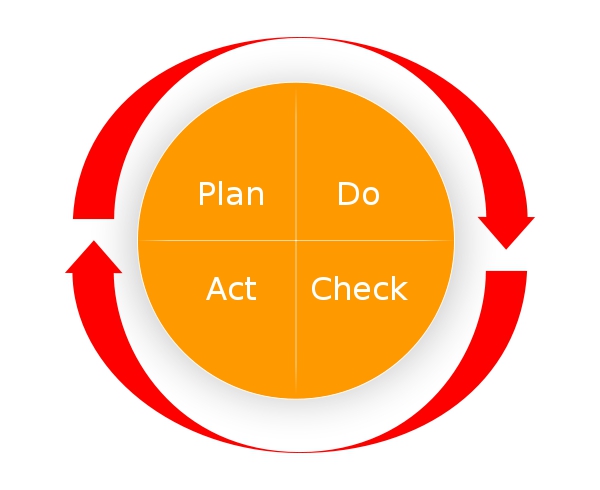
Quality Circle

What Is Quality Management? Do you really need it? Some claim to have it, others want it. Some offer it for a price, and others will ‘run for the hills’ if they hear word of it.

If you work in an organization long enough, eventually you will hear the terms ‘quality management’, ‘quality circle’ or ‘quality control’, as surely as you would hear the word ‘trendy’ if worked in the fashion industry. In fact, go to any bookstore, and you’ll find tons of books espousing all manners of theory and practice for business concerns.

Continue reading

The Devil’s Advocate: Why Should A Lesson Be Fun?

As an EFL teacher for the last quarter century (sounds more impressive than 25 years), I have been taught and have taught other teachers the profits, or perhaps more accurately the necessity, of providing an enjoyable lesson. I have said in my teacher training workshops that if the students are not enjoying their lesson, they will simply tune out and perhaps even become disruptive. It all sounds perfectly logical, politically correct and nurturing.

In terms of teaching students, I have often experienced, as I am sure you have too, a sense that you can actually feel the learning process taking place when you have given your students a task that interests and motivates them. The question is, however, does it always have to be like this? Also, can it always be like this? More fundamentally, is it wise, educationally speaking, to put so much emphasis on creating entertaining lessons, and at the end of the day, will our students truly benefit from adopting this kind of approach.

Continue reading