One of the jobs teachers have is to foster student participation. After all, ‘class time’ is for students to practice and produce language expression and skills. I’m sure you will agree it’s not for ‘teacher talking time’ (TTT). However, if you find yourself ‘all talked out’ at the end of a lesson, it’s useful to examine whether most of your time is spent explaining things, and how much of your time and effort is spent trying to maintain discipline and interest levels.
Author Archives: Jay Leonard Schwartz
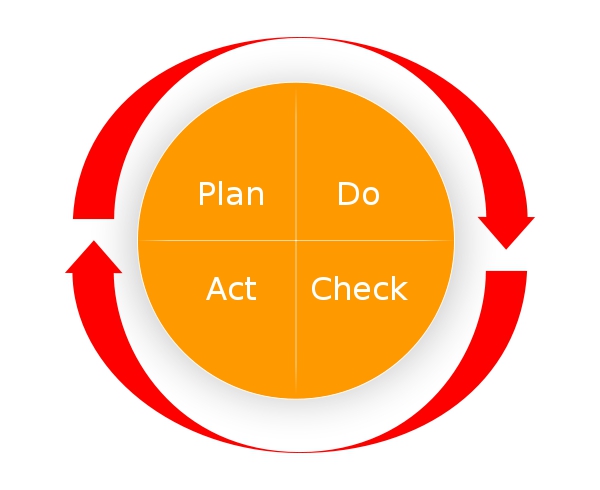
Quality Management For Language Schools: A Preface To Establishing Your Own Scheme
What Is Quality Management? Do you really need it? Some claim to have it, others want it. Some offer it for a price, and others will ‘run for the hills’ if they hear word of it.
If you work in an organization long enough, eventually you will hear the terms ‘quality management’, ‘quality circle’ or ‘quality control’, as surely as you would hear the word ‘trendy’ if worked in the fashion industry. In fact, go to any bookstore, and you’ll find tons of books espousing all manners of theory and practice for business concerns.
The Devil’s Advocate: Why Should A Lesson Be Fun?
As an EFL teacher for the last quarter century (sounds more impressive than 25 years), I have been taught and have taught other teachers the profits, or perhaps more accurately the necessity, of providing an enjoyable lesson. I have said in my teacher training workshops that if the students are not enjoying their lesson, they will simply tune out and perhaps even become disruptive. It all sounds perfectly logical, politically correct and nurturing.
In terms of teaching students, I have often experienced, as I am sure you have too, a sense that you can actually feel the learning process taking place when you have given your students a task that interests and motivates them. The question is, however, does it always have to be like this? Also, can it always be like this? More fundamentally, is it wise, educationally speaking, to put so much emphasis on creating entertaining lessons, and at the end of the day, will our students truly benefit from adopting this kind of approach.
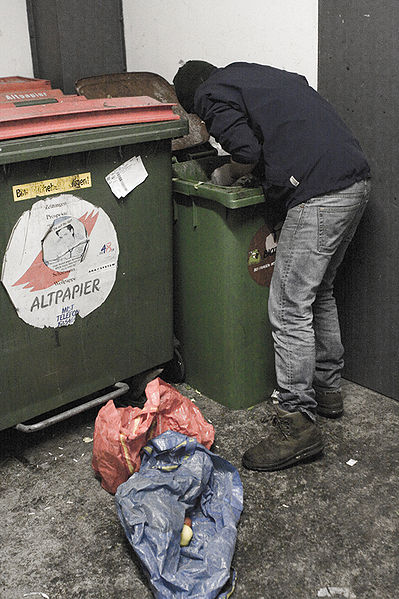
Freeganism: A Lesson Plan
Note: this article was written and first published online by out dear friend and colleague, ‘Teacher Dude’, on his blog: http://teacherdudebbq.blogspot.gr
I once came across an article about ‘Freeganism’. It was titled “One Person’s Dumpster Is Another’s Diner” and was written by Becca Tucker, and posted on AlterNet on March 21, 2007. The article begins: “A subculture of people make a statement by living off the waste of millions.” For three days, a reporter gave it a dumpster-diving go in the “freegan” paradise of Manhattan.” I thought that it would make for an interesting lesson. As the article is quite long and complex this would be best done by advanced students.
The link to the article maybe found here: http://www.alternet.org/story/49547
Lesson Planning: What Do You Know? – Part 2
This is the 2nd part of my post on lesson planning. If you haven’t read through part 1 yet, there do that first. Click here for part 1.
In this part we’ll start with some of the unanswered questions in Part One. Concerning possible problems that may occur in some of the activities that you have planned for your lesson, it is a good idea to perhaps change the activity altogether or at least have an alternative. For example, if the activity in which students were asked to find 5 things that they had in common (an ice-breaking activity) it would be best to change it to one in which they discuss free time activities they like and dislike and then see what, if any, common ground there is.
Lesson Planning: What Do You Know? – Part 1
When I was training for the RSA Dip (currently the DELTA Diploma), the most useful lesson, the one that fundamentally changed the way that I had taught up to that point was ‘lesson planning’. Lesson planning gives direction and ultimately makes lessons more productive, interesting and professional.
What follows are a number of exercises which will help you see what you know about lesson planning. Tip: to make things easier, print this post out.
Correcting Student Composition: Teacher Mindsets And Student Egos
As a follow-up to my last post on using correction codes, I thought it was appropriate to look at little deeper into the whole task of correcting students’ work, especially in terms of how teachers relate to doing this ‘chore’.
Having spoken to many teachers over the years, not just EFL teachers, I get the fact that probably that correcting papers, especially at home, is probably very low on the totem pole of reasons why one decides to become a teacher. Still, it is a vital function of the teacher, and moreover, one that directly impacts our students’ creative efforts. So, we should tread lightly and give some thought to our mindset when doing this.
Using Correction Codes: Saving your students from going down with their ‘slips’ in a sea of red ink!
How often has this happened to you? You sit down with your one of your students (read: certificate exam candidates in Greece) and review an essay he or she has produced, and you have subsequently corrected. At one point, you come to a bit of text that you had previously underlined, and perhaps had inserted a question mark or ‘WTF’, in order to question the student on confusing point he oe she had made. You explain to the student that you aren’t quite sure what this part means. The student responds something along these lines: “Yes, what I meant to say was … uh …”, or “What don’t you get? I thought it was obvious…”, or perhaps “Come on! Anyone who reads it will know what I mean!”, or maybe even “Hello!? Do I have to fill-in the blanks for you?”
In my case, after pestering the student to provide more details, I might suggest, “That was a marvelous explanation! Why didn’t you write it down in the first place?”, or “Yes, well I understand what you mean now, because you just explained it to me. However, when someone else reads this, or an examiner grades your paper, you aren’t going to be able stand next to him and explain all that. You have to write it down so that he can see it and understand it in the first place!”
More Thinking About Using A Song
Note: This article was written by our dear colleague & friend, Steve Vassilakopoulos.
In my previous post, I discussed how and why to use songs in the classroom, but my main focus was how the lyrics in a song can be exploited. However, there are, as the old saying goes, many ways to skin to a cat. If we go beyond the words a song contains and think about the music that a song contains, there are fertile pastures to be found there. In this article, I will explore two such ways of doing this, but having said that, there are numerous others as well.
The first use that we will look at is the use of music as context for narrative writing. And “what do you mean by that?” I hear you asking. Well, using music as context means providing music as inspiration to stimulate the imagination, lubricate the gray cells and get the old creative juices flowing. In practical terms it involves putting on a piece of music, setting a task for the students and then getting on with the feedback.
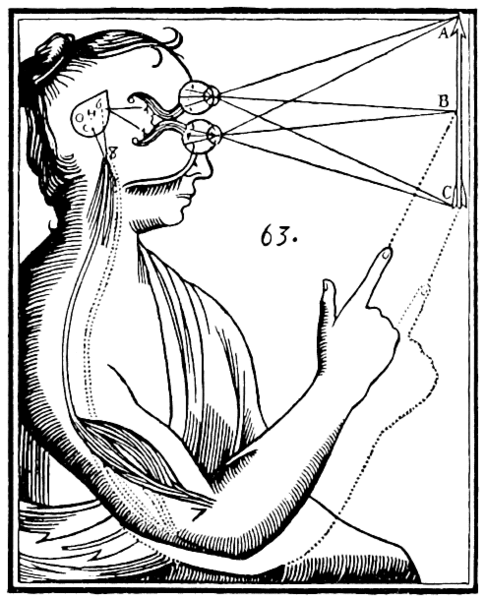
Whom Can We Trust?
AIM: Vocabulary for character traits
LEVEL: Intermediate and above
TIME: 45 minutes
MATERIALS:
Photos of people (emphasis on facial features/ langauge), Dictionaries
PREPARATION:
Photo Sources: Photos may be cut from old magazines or found on the internet. Search Google.com. Type in ‘faces’ and click on images. You will find many to choose from. If a coursebook is used, leaf through it and note down the page numbers with some photos to refer to. Try to find a good range of photos to work with depicting varying facial expressions. Using celebrities will help build interest, but try to use non-celebrities, as well.