
 This post is part of an ongoing series on Quality Management for language schools.
So, you’ve decided to jump into the ‘quality’ pool. Your reasons for doing so may be varied, but most likely, if you are a school owner or have been charged with the task of establishing a system of quality management at the behest of the school owner, you are probably wondering where to start. Answering this question is what this post is about.
A good place to begin is by asking both yourself and your staff questions of both. This suggests creating a survey and, obviously, calling for a staff meeting to discuss your intentions, as well as to carry out the survey. In this post, I’ll begin to discuss the composition of the survey (below) and continue on in my next post. However, before that let’s start with ‘you’ and how ‘you’ approach such a staff meeting.
Make time to fo the following task before calling for your staff meeting. Write down 3 to 5 strengths you believe your school possesses in the category of teaching, administration and successful student enrollment. Then, write down at least 3 areas for improvement in these categories. You can also ask yourself why the establishment a quality scheme is important to you, and what you hope to gain from its implementation. Ask yourself what the word ‘quality’ means to you, and to what extent your school has or doesn’t have it. Once you’ve done this, it’s time for your meeting with the staff.
It’s been my opinion over the years that fostering quality is something that involves all members of the staff. Others have varying opinions, suggesting that a survey should be given only to members of a select quality management team, representing all departments within the organization. I disagree, and standby the success I’ve experienced doing it my way, by including everyone. For me, it’s important to have the input of as many members of staff as possible, and to be honest, concerning a language school, even getting feedback from a sampling of students will speak volumes of your operation and give you more food for thought.
A quality management scheme requires a team effort. It’s not something that 1, 2 or 5 people establish and then force and enforce on others. Success follows when all concerned are contributing to the flow of information (observation and feedback) and feel that their input and contributions are not only valued by the school, but also by themselves. In other words, each individual in the school should feel as motivation that he or she personally reaps some benefit at the personal and professional level from contributing to quality circle.
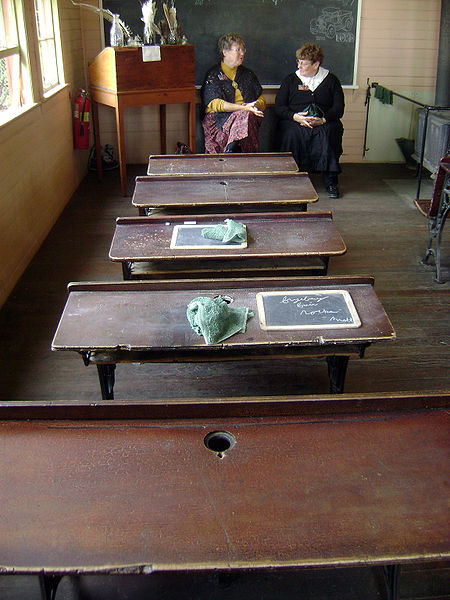 Time For A Staff Meeting!
At the meeting, I would keep things simple to start with by just stating your intention to establish a scheme of quality in the school. Invite feedback. Don’t be surprised if different people have different ideas of what ‘quality’ means, not so much in general as a concept, but in terms of how it is applied in practice. As I mentioned in my previous post, you may find that some don’t even want to be bothered with a quality scheme and see ‘change’ with disdain because they see it as a threat.
You should express your reasons for wanting a quality management scheme, but bear in mind that those listening to you may be critical, skeptical and certainly judgmental. Hopefully, some will embrace your vision, but you do need to be careful not alienate anyone at this early stage. Proceed with caution and be prepared to face adversity. It’s OK to say that you may not have all the answers at present, but that you will find them together down the road. Explain that the effort will grow from the bottom up, at the ‘grass roots level’. Embrace those who express anxiety.
It should go without saying that you want to avoid expressions that might be taken as personally offensive to staff members. You’re not there to point the finger of blame at anyone for the school’s short comings, or to assert your authority in an effort to ‘take control’ of problems. Talk about improving the schools strengths, don’t harp on the school’s weakness.
Keep in mind that an expression like “to improve school efficiency and productivity” can also imply to individuals that they are deficient in some way at their jobs. So you do want to be sensitive in how you approach expressing your desire for positive change. Once the discussion is over, it’s time for questions in the form of a survey.
What The Survey Should Cover
Generally speaking, most quality schemes I’ve had some involvement with tend to focus on 3 areas: academic management, administration management and marketing and promotions. These main areas may include many and varied sub-areas, as well, such as procedures governing business operations, record keeping, syllabus creation, teacher training, or even routines for assuring truth in advertising. In another other post, I’ll elaborate more on why these 3 main areas are usually targeted and why each is important to the success of the school in their own right.
What you are after in this meeting are the feelings and knowledge the staff has regarding the school and their place in it. Note that it’s not just about gauging how teachers, for example, feel about their job satisfaction or how they are treated as employees. It’s about finding out how well the teachers know the school and their place in it, as well as their perceptions thereof. The latter is important in gaining valuable insight that an owner or manager does not necessarily have because of their position in authority.
Conducting The Survey
It’s important to make the staff feel secure that the survey is being conducted under anonymity and that the school administration is not out on a witch hunt to identify disgruntled employees. On the survey form, the option should be left for employees to leave their names, if they so wish. And, if they have no problem doing so, they should be told nonetheless that their names and opinions will be kept confidential.
The survey should, however, include a place for the staff member to enter their position. This will help qualify the insight they provide to different ares. While the survey can be broken up into sections, I’d like to suggest that there be one uniform survey for all employees regardless of their position. This promotes a feeling of equality among employees, and also fosters the sentiment that the school is open to anyone’s opinions regardless of their job description.
As I mentioned above, the survey can be designed in sections, each devoted to specific employee types. Obviously, a janitor would not be in a position to answer questions on syllabus design, so labeling each section separately would help (example: ‘This section is for teachers’). Staff members can be told to skip sections that do not relate to their jobs, but also that they are open to respond if they so wish. Reassure them that all responses are welcome.
It’s also vital that the staff understand that there are no correct answers to the questions being asked. You should encourage them to be open and honest, and to include any positive or negative points they see fit to mention.
Ideally, all schools should have a marketing prospectus and staff handbook (more on this in another post). This material could be made available to the staff during the survey for reference. Doing so helps allays fears some employees might have concerning answering incorrectly to questions. Yes, stress levels always decline when the teacher announces an ‘open book test’.
The question types should elicit short answers. However, in some cases a range of numbers from 1 for poor to 5 for excellent can be given to be circled. Lines or space can be provided for elaboration. Leave space under each section for extra comments or suggestions, and mark the area as such.
Lastly, enough time should be allotted for the staff to complete the survey. In my opinion, its best to get this task over and done with, and not to allow the staff to take the survey home to be submitted later. The survey, therefore, should not be designed too comprehensively as it’s purpose is to provide a general overview, and not a detailed analysis. Personally, I would suggest including approximately no more than 50 questions per section and that the survey take no more than 20 to 30 minutes to complete.
Suggested Survey Questions:
The following are some suggested questions and areas to further elaborate on. These questions are aimed for teachers. In my next post on this subject, I’ll include suggested questions for all employees (general) as well as those concerning the administrative and marketing functions of the school.
Keep in mind that the questions below do not necessary comprise a complete survey. I feel that surveys should be customized to some extent. I don’t believe per se’ that ‘one size fits all’. However, I have tried to ‘cover the bases’ below to give you a broad overview of some important areas for discussion. Hopefully, the following questions should give you an idea of what items your school may need be lacking, or what issues might need addressing.
I also want to mention that some of the questions below are loosely based on, but not limited to, my experience working as a consultant and director of studies for schools undertaking an ‘Eaquals‘ inspections to become full members of this quality association of language schools.
 School Premises:
Are the premises suitable for you to do your job? How do you feel about …..
- … the size of the classrooms
- … furniture and fixtures (desks, chairs, black / white boards)
- … presence of and quality of resources (audio/visual equipment, computers or computer lab, etc.)
- … facilities (staff room, kitchen, bathrooms, etc.)
- … the school library (for students and teachers)
- … the availability of chalk, board markers, etc.
Do you feel the classroom is laid out in such a way to facilitate pair and group work?
Is there sufficient room for tasks which require students to get up and move around?
Safety
- Do you feel your working environment is safe?
- Does your school have an emergency evacuation plan for fire or earthquakes?
- How often does you school run fire drills? Is there a record of this?
- Are fire alarms, exit routes and exits clearly marked?
- Do you have smoke detectors and fire extinguishers in your classrooms or work area?
- Comment on any safety hazards or areas for improvement
Academic Program and Support:
Teaching Related:
- Do you believe the school has an overall syllabus for all levels and courses?
- If the above is true, do you have any input into the creation of such a syllabus?
- Are you familiar with any specific methodology or teaching approach taken by the school?
- Are you expected to conform with any of the above?
At the beginning of the term were you given:
- – a course syllabus and description of the classes and levels you teach
- – teacher editions of all texts (coursebooks, workbooks, companions, etc.
- – marking book for exams, quizzes and class or homework
- – a book list
- – a school calendar
Materials:
- Do you make reference to a course syllabus during the year for lesson planning purposes? Are the course syllabuses you receive realistic and achievable?
- Do you have any input into the selection of materials chosen for the courses you teach?
- Do you feel the materials you work with are efficient?
- Are you allowed to design additional material or use supplemental material?
- If you answered ‘yes’ to the above question, does the school provide you with supplemental or resources to design material (example: computers, transparencies for OHP).
- If you answered ‘no’ to the above question, are you expected to created material at your expense?
- Does the school have a teaching resource library you can use?
- What is the school policy on photocopying course books or other material?
Lesson Planning:
- Are you required to complete lesson plans for each lesson?
- Do you feel a need for lesson planning? Please explain.
- Were you given a lesson plan format to follow?
- Does the school make available blank lesson plan forms for you to use?
- If you answered ‘yes’ to the above question, do you where they are located?
- Are your lesson plans kept on file at the school?
- If you answered ‘yes’ to the above question, do you know where they are located and do you have access to them?
- Do you believe your lesson plans are reviewed by management at any time?
- Is there a system in place for substitute teachers to be informed of what to teach (are previous lesson plans available for review)?
Student Related:
- Do you receive any information in advance about the students you will be teaching in each class?
- Do you feel they have realistic expectations of the education they will receive?
- For placement purposes, how are student levels assessed in your school?
- Do you feel students are placed in appropriate level classes?
- What happens when students are misplaced?
- Does the school have a policy for tardy or absent students?
- Does the school have a policy for disciplining students?
- Do you believe that students understand how their progress is assessed during the year?
- How often are students offered feedback on their progress?
Academic Support:
- How often are you observed teaching by a superior (school owner or director of studies)?
- Why were you observed?
- Did you receive any feedback following your observations?
- How often do you engage in peer observations?
- Are peer observations encouraged in your school?
- How often do you meet with your immediate supervisor (director of studies, school owner, etc.)?
- Do you feel you meet with the above individual too often or too little?
- Do you feel these meetings are constructive? Why or why not?
- How available is this individual for non-scheduled meetings?
- Does this person have regular office hours to provide support?
- Are you encouraged to participate in staff meetings by contributing your ideas and suggestions?
- Do you find staff meetings useful? Please explain.
Teaching Training:
- Do you feel the school places value on teacher training (methodology, etc.)?
- Does the school arrange in-house seminars that support you in your job as a teacher?
- Do in-house seminars only concern how to use an adopted commercial coursebook series? Are such seminars organized by publishers and delivered by marketing personnel, rather than by credible teacher trainers?
- How strongly do you feel about continuing your teacher training?
- Does the school offer you any schemes for further teacher training?
- Are you provided with any information about local teacher training opportunities or local TESOL type organizations?
- How often does your school have staff meetings?
Administration:
- At the beginning of the term were you given:
– a legal work contract specifying the terms and conditions of your employment?
– an employee handbook
– a clear and accurate job description
– information about pension and health insurance deductions - Do you feel that your job description is valid?
- Do you know who you report to?
- Do you feel there are opportunities for you to advance?
- At the end of the year, are you given any form of performance review?
- At the end of the year, are you given an opportunity to complete any form of school or job evaluation?
As I mentioned above, my next post on this subject will continue this look at a survey of this nature and include suggested questions for all employees (general) as well as those concerning the administrative and marketing functions of the school. I hope the question above will get you thinking about your own school. And, if you are a teacher, I hope these questions help shed some light on the quality of your own employment. I welcome your comments below on this.
Suggested Reading:


 ELTvisa
Pingback: Getting At The Whole Truth: More Quality Management Questions | ELT Vista