
 Note: This article was written by our dear colleague & friend, Steve Vassilakopoulos.
In my previous post, I discussed how and why to use songs in the classroom, but my main focus was how the lyrics in a song can be exploited. However, there are, as the old saying goes, many ways to skin to a cat. If we go beyond the words a song contains and think about the music that a song contains, there are fertile pastures to be found there. In this article, I will explore two such ways of doing this, but having said that, there are numerous others as well.
The first use that we will look at is the use of music as context for narrative writing. And “what do you mean by that?” I hear you asking. Well, using music as context means providing music as inspiration to stimulate the imagination, lubricate the gray cells and get the old creative juices flowing. In practical terms it involves putting on a piece of music, setting a task for the students and then getting on with the feedback.
Now, lets start with the procedure. Let’s say, for example, you wanted your students to write a love story. You could begin with a set of pictures of both men and women and a list of occupations and get the students to match the pictures with the occupations. Having done that, the students now have a set of characters. You could then get the students into groups and have them discuss what the personalities of each of these characters is like. Following this, you can tell them that it is time for them to play matchmaker, and try to find what they believe to be a suitable couple.
When the students have found their characters, the time has come for the music to play its role. You can tell students that with all relationships, as with all narratives, there has to be a beginning, middle and an end. The beginning of the relationship that the students will write about begins with music and you tell them the music provides the context for their first meeting. While the music is playing, provide a number of prompt questions on items such as where they are, what they are doing, how they begin talking, whether they are alone or with others, what their first impressions are of each other, etc. The type of music you choose for this and the other occasions to follow needs care and consideration, Nevertheless, however your options are wide open.
The piece may be tranquil and romantic or it may be dark and mysterious but no one can truly say what will work or not work with your students. What is best however is a piece of music that has a sense of expectation.
The second part of this narrative, as with relationships in general, is the good part. This is where the relationship begins, grows and blossoms. But, it is also usually when the seeds of its demise are sown. Therefore appropriate music needs to be provided here that can be inspiring for students to think about and write about how the couple’s love affair develops, as well as what the couple do together, where they go, what type of lifestyle they live, what problems they may have and how they deal with them. The music chosen here should be reflective, but not morose, so that it inspires positive thoughts about relationships. It should also be quiet enough to let a story line emerge.
The final part of the our story is the end, when the couple cease to be a couple. At this point you tell your students that the couple breaks up and the music that they hear is the context for their last meeting.
The kind of music that you choose will to a great extent decide why the couple has broken up. The music you choose may suggest infidelity, however a sad romantic piece may suggest that outside factors may have come into play, and the couple may still be in love but are forced to live apart. It’s all up to you and your students to decide their fate.
Another way you can use music in the classroom without employing the lyrics is to use it to talk about music itself, and more specifically in this case to compare different pieces. For these purposes, it is a good idea to use three songs and ask your students to think about points such as the genre, the instruments used, the voice, the speed, how good they are in terms of technique and how good they are in terms of interpretation as well as how expressive they are. It would be a good idea to give students a handout with these questions in a grid form for them to think about and to make notes on as they listen to the pieces. The kind of music you choose is completely up to you, but if you love music, as I do, I’m sure you will make the right choice.
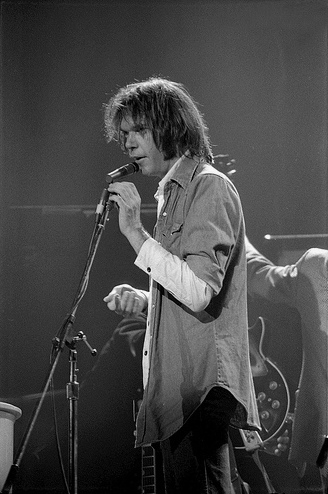
Comparing different pieces, however, does not only involve comparing the music itself. It can also involve comparing and contrasting the content and theme of the lyrics of various songs. To find such pieces you need to find songs that have a connection in terms of the above. For example, let’s have a look at two Neil Young songs ‘Southern Man’ and ‘Cortez the Killer’.
After presenting the songs with the lyrics you can get your students to find the similarities and differences. But before doing that you may, in this case, provide historical and cultural information about these two events. And, even before you do that you will also have to hunt up the connections yourself! And that dear readers is your task for today. Please comment on this post with your responses along with the lyrics and connections that you have found. Alternatively, you can do suggest other songs, and relay what you have found.
SOUTHERN MAN
Southern man better keep your head
Don’t forget what your good book said
Southern change gonna come at last
Now your crosses are burning fast
I saw cotton and I saw black
I saw mansions and little sacks
Southern man when will you pay them back?
I heard screaming and bullwhips cracking
How long? How long?
Lilly Belle your hair is golden brown
I’ve seen your black man comin’ round
Swear by God I’m gonna cut him down
I heard screaming and bullwhips cracking
How long?
CORTEZ THE KILLER
He came dancing across the water with his galleons and guns
Looking for the new world and that palace in the sun
On the shore lay Montezuma with his coca leaves and pearls
In his halls he often wandered with the secrets of the world
And his subjects gathered round him like leaves around a tree
In their coats of many colours for the angry gods to see
And the women all were beautiful and the men stood straight and strong
They offered life in sacrifice so that others could go on
Hate was just a legend and war was never known
The people worked together and they lifted many stones
They carried them to the flatlands and they died along the way
But they built up with their hand what we still can’t do today
And I know she’s living there and she loves to this day
I still can’t remember when and how I lost my way
He came dancing across
Suggested Reading:


Article Reference:
Musical Openings, David Cranmer & Clement Laroy, Longman Publishers
 ELTvisa