
 AIM: Vocabulary for character traits
LEVEL: Intermediate and above
TIME: 45 minutes
MATERIALS:
Photos of people (emphasis on facial features/ langauge), Dictionaries
PREPARATION:
Photo Sources: Photos may be cut from old magazines or found on the internet. Search Google.com. Type in ‘faces’ and click on images. You will find many to choose from. If a coursebook is used, leaf through it and note down the page numbers with some photos to refer to. Try to find a good range of photos to work with depicting varying facial expressions. Using celebrities will help build interest, but try to use non-celebrities, as well.
Each pair of students should be given 2 to 4 photos to work with. These may be photocopied onto a single page. Alternatively, photos can be pasted into a PowerPoint presentation or copied onto an overhead projector transparency.
PROCEDURE :
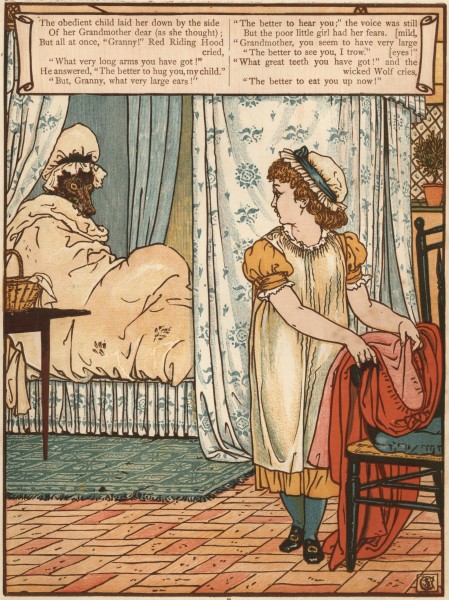
Elicit the story of “Little Red Riding Hood” from the students so that the full details of the story are given. Ask students why Little Red Riding Hood was so gullible. Ask them to explain why they might not have been fooled.
Pre-teach the word list below containing character descriptions. Try miming some of the words. Ask students to mime as well.
Put students in pairs and give them the following list of words and the photos. Ask them to match the words with the appropriate pictures and characters.
Elicit answers from each pair. Ask them to justify their answer.
Suggested word list: naive, benign, cunning, open-hearted, evil, genteel, heartless, ruthless, brave, attentive, gentlemanly, polite, caring, vicious, suave, debonair, courtly, credulous, candid, gullible, simple-minded, brutal, vile, etc.
Put the students in pairs/groups and ask them to discuss situations in which people they had contact with in the past turned out to be quite different from what they had appeared to be.
Ask the students in different pairs/groups to discuss what they have gained or learned from their negative experience.
Elicit the lessons that were learned from the students and elicit words associated with character building (e.g. confident, self-assured, reliant, wise etc.)
Ask students to write a story for a hypothetical pop magazine with the title: “Won’t Be Fooled Again”
Variations:
– During the introduction, use photos of Batman and the Joker. Discuss what would make Batman more trustworthy than the Joker, on first impression.
– Following the use of the photos, ask students to show you how someone would look if they he was cunning, brave or simple-minded. Have students mime the different character descriptions. Have students get into pairs. Students take turns picking a character trait to mime for their partners. Partners have to guess the character trait.
For lower levels:
This task can be adapted for lower level by choosing lower level adjectives (happy, kind, cruel, evil, etc.). Have the students mime the adjectives. Students can also be asked to draw faces or people representing the various character traits. Students can come up to the front of the class, show their picture and get the others to guess the corresponding adjectives.
Learning styles related:
Use of photos and mime supports visual oriented learning styles. Miming and drawing also support kinesthetic learners.
Suggested Reading:


 ELTvisa