
Note: Th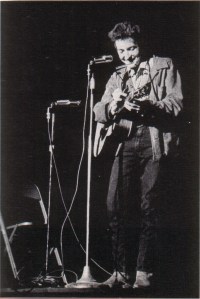 is article was written by our deal colleague and friend, Steve Vassilakopoulos.
The aim of this article is to get you thinking. That is, thinking about the use of songs in the teaching of English. To start with, the first thing to think about is you and music. How often have you used songs? Why is this so? Are songs a regular part of your teaching repertoire? If so, why or why not? Why do you use songs anyway? Are songs a part of what you are teaching on that particular day, a part of your lesson plan so to speak or do you use them as a break from the boring but necessary material you normally use? Which songs do you choose and why? Do you choose the songs or do your students have a say in the matter?
Here are some more questions! Do you consider the use of songs as ‘serious’ teaching and do your students feel that the use of songs is ‘serious business’? How much class time should be used when dealing with songs? Do we need a full lesson or can a song be a 10 minute activity? Can we use more than one song in a lesson? Can we use songs that are in some way related to each other, either in terms of content, meaning or language? And lastly and most importantly, how do you feel about using music? Is the preparation and presentation of the material that you are going to use a labor of love, something that motivates you and fulfills you as a teacher and a person, or is it no different from just using a grammar or vocabulary exercise and probably a lot less useful?
At this point, you might be thinking “You sure ask a lot of questions!” But, the truth is that these are things you should reflect on before you use songs, instead of using them simply because someone like me tells you something vague such as “song are a good idea.”
Now, concerning how we use songs, let’s use as an example of a song that I have used, Bob Dylan’s “Blowing in the Wind”. You can find the song on YouTube.com. Here are the lyrics below:
Blowin’ in the Wind
How many roads must a man walk down
before you call him a man?
How many seas must a white dove sail
before she sleeps in the sand?
How many times must the cannon balls fly
before they’re forever banned?
The answer my friend is blowing in the wind,
the answer is blowing in the wind.
How many years can a mountain exist
before it is washed to the sea?
How many years can some people exist
before they are allowed to be free?
How many times can a man turn his head
and pretend that he just doesn’t see?
The answer my friend is blowing in the wind,
the answer is blowing in the wind.
How many times must a man look up
before he can see the sky?
How many ears must one man have
before he can hear people cry?
How many deaths will it take till he know
that too many people have died?
The answer my friend is blowing in the wind,
the answer is blowing in the wind.
(Lyrics / Music © Bob Dylan)
If you were to use this particular song, how would you do it? Lets begin with an old favorite task, taking out some of the words and getting the students to listen to the song and fill in the blanks.
If you decide upon this route, take the following 4 questions into consideration:
- Which level would this song be appropriate for?
- How is this activity going to be useful for my students and will it be interesting and motivating?
- Which words and how many are going to be blanked out?
- Will my students be able to successfully complete this exercise?
Now songs, of course like any text, need some sort of introduction, a warm up activity. What do you think could be done? Try answering this multiple choice question:
To introduce this song do we can:
(a) elicit information about the song, the era (early 60’s), and the songwriter.
(b) elicit what “Blowing in the Wind” refers to.
(c) provide a short bio about Dylan, ask students to read it and follow it up with a comprehension check.
(d) all of the above
(e) none of the above. I’ve got a better idea
If you have chosen the safe option (d), think about timing. After all, how long can a warm-up be? The crucial question, of course, is which words would you use to blank out and how many should they be. A lot of this depends on the length of the song, clarity and speed. If students are going to listen to a song and put in the words they hear, they will need time to think and write. It follows then that the spacing of the blanks needs to be reasonable.
Concerning the choice of the words themselves, we have to take into consideration which language skills and thinking processes come into play when we ask students to fill in the blanks. For example, look at the following lines from the song:
How many roads must a man walk down before you call him a man?
How many seas must a white dove sail before she sleeps in the sand?
If we take out the second ‘man’, do you think it would be easier for students than if we took out ‘sail’? Why? Think about the dynamics of rhyming and beat and also about context. Do you think a ‘dove sailing’ is an easy collocation? Also, would you try to get your students to do the exercise as an ‘open cloze’ without listening to the song, and then use the listening part to enable students to check if their responses were correct? If you choose to do this, then choice of words is paramount, as well as your students having cognizance of content, parts of parts of speech, rhyming and rhythm.
Since we are on the topic of cloze task, what about using a multiple choice cloze? In this case the choices can be fun and involve discussion and justification of choice. For example, you could suggest this form of question:
How many roads must a man (a) jog down (b) run down (c) stride down (d) walk down before you call him a man? Consider which would be most appropriate and why.
In a multiple choice cloze you may wish to use items that may be more appropriate than the original and in some cases more up to date. For example:
How many times must the (a) stealth bombers (b) nuclear missiles (c) smart weapons (d) cannon balls fly before they are for ever banned?
This appears to be an enjoyable and creative process so why not let your students in on it and let them create similar multiple choice cloze with songs that they are familiar with or with ones that you have already used in class. You may also ask students to change certain words or phrases in the song and discuss what these changes do to the meaning and message. For example, what happens if we change ‘people’ to ‘women’ in the lines?
– How many years can some people exist before they are allowed to be free
We can also exploit the language structures used in the song and create suitable exercises. “Blowing in the Wind” is a series of rhetorical questions in its three verses, and the chorus is the answer to these questions. The structure of the rhetorical questions is repetitive. Therefore, if you give your students one line as an example: “How many times must a man look up before he can see the sky”, then jumble up the rest of the verses, (i.e. “ears cry many before one how have people can must he man hear”) the students should be able to put the song back together.
As you can see, there are several ways in which the language structures employed in songs can be exploited, and obviously there are a number of others that can be used, as well. However, besides language structures, songs can also be utilized in terms of exploring message and meaning. That is, what message the song conveys to you personally, and what emotions it evokes.
For example, what is the message that “Blowing in the Wind” conveys? It’s obviously a song with a strong point to make, and the songwriter is very focused in this regard, but is it a protest against war, a protest against our indifference to mistreatment and injustice, a cry for civil rights, or a call for international brotherhood? Is it perhaps all of the above or something else altogether? All this could make for good discussion points in class. As a follow-up, you can ask students to talk about civil rights issues, – or in Greece (where I teach) or the rest of Europe, you can have students write a letter of protest to their member of parliament.
This article hopefully has got you thinking about using songs in the classroom, and I have also asked you a lot of questions, some of which have remained unanswered. I hope you will take the time to answer as many of these questions as you like and respond here to this post.
Suggested Reading:


 ELTvisa
Pingback: More Thinking About Using A Song | ELT Vista