
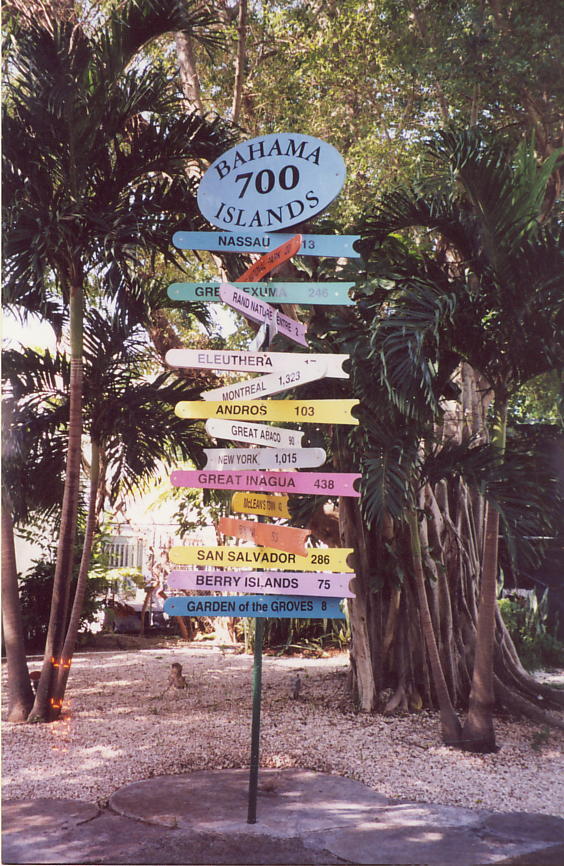
 Most people love choices: left or right, onwards or homewards, yes or no, combined with the trepidation of ‘what if…?’ or ‘have I made the right decision?’ This task suggestion is loosely based on a series of novels published in the UK in the mid-1980s; novels in which the reader could decide the fate of the protagonist depending on decisions made or routes chosen.
The ultimate aim of the task, the desired learner outcome, is to facilitate a working knowledge of narrative tenses, modal verbs, conditional structures and vocabulary relating to character and adventure. The desired aim of the task, however, is to promote team-working skills, communication development and to have fun, a commonly neglected word! Amalgamating the two approaches needn’t be hard work for the teacher and the end product can be made into wall posters, a school presentation or a ‘take home and keep’ novella.
For the purposes of the article, we will assume that the target level is B2 Intermediate and that 3 to 4 classroom hours are available (5 if a follow-up presentation is included). Ideally the students will be familiar with basic narrative structures, decision-making modal verbs and, for communication purposes, conditionals. However, the first classroom hour can be used to develop the notion of story telling written, visual or oral and decision-making, whilst exploring the grammatical forms briefly. A good way to do this would be to write a sample sentence on the board, such as: ‘as the man walked into the room, he knew that his life would be forever different.’ Eliciting narrative forms and questioning whether the man has made a good decision would provide an opportunity to explore the grammatical structures at sentence level. At this stage, however, students should be discouraged from over-structuring grammatical formulae and should be encouraged to develop contextual usage.
THE TASK
Teachers will need to prepare three 50-word paragraphs let’s say chapter 1, chapter 3 and chapter 5. Any story is suitable, although a story that includes scope for development is recommended. The only concession that needs to be made across the range of learner levels is that the grammar and vocabulary should be scaled up or down. A packet of coloured pens would also be useful for very young learners or would be Proficiency artists!! The first chapter, which will be presented to the class as a whole, will set the scene. For example:
Initially, students can be asked about the form or possible genre of the story, how they would feel and what they would do. Grammatical points can also be reinforced at this stage. Students can then be informed that the man agrees to help the old gentleman, drinks a magic potion and is transported to a far distant land with fast flowing rivers, rugged snow-capped mountains and forests.
The story can be furthered by writing on the board the last message given by the old man: ‘up there squire, at the top of the mountain that has no name lies a golden key the key to our future and to my past. Please find it and return it to me…….’ Again, on the board, a picture of the man thinking: ‘which way should I go…..left and through the forest, right and up the mountain face or straight ahead and up the river…’ can be presented.
Students should then be divided into groups of two or three. Each group can be given a choice as to which route to take, although it is much better if all the routes are covered. Upon deciding which route to take, each group is given a set of contextual words (river, forest or mountain) that must be included in the story. The number of words is discretionary, but between 10 and 20 will help further the narrative. Younger students can be asked to draw the story and to label the pictures using the words given.
Examples of words that can be given are:
FOREST: dark, threatening, eerie
MOUNTAIN: rugged, steep, dangerous
RIVER: Icy-cold, deep, currents
Upon completion, each group can present their story to the class. Chapter 3 can then be presented by the teacher. Again, each group can be questioned as to which challenge they would be prepared to make and why.
After the groups reform, another 10 to 20 contextual words can be given and each group can further the narrative. As with the last chapter, each group can choose a challenge, although covering all three challenges will provide a better feedback session.
Upon completion of chapter 4, the key challenge, discussion can return to a whole class based activity and each challenge can be presented by the different groups. After feedback and presentation, the teacher can either present a ready-made conclusion, or as a homework activity the class can be assigned a conventional FCE level (B2 level: 120-180 words) story starting with the given words: ‘At last he reached the key, but the adventure, it seemed, was only just beginning.’ For younger learners a picture story, along the same theme, can be assigned.
Depending on class time available, many different feedback sessions can be held. Young learners might enjoy making the (picture) narrative into wall posters or older learners might enjoy creating a novella which can be kept as a memory. Ultimately, however, the choice is yours!
 ELTvisa
I really love this task. Works like a charm, especially when you get students to create their own books! Something for them to cherish they won’t soon throw away (like their coursbooks :P).
LikeLike
I really loved this idea!! Something I will definitely try with my students!
LikeLike
Thanks for your comment! Let us know how that works out! 🙂
LikeLike