
 Note: The following article was written by our dear colleague & friend, Steve Vassilakopoulos.
A Call to Action: Kick Ass Ecology (It’s more than just a classroom task!)
As teachers of English, the de facto international language, what we should be doing is teaching our students the English they will need to help save the environment and the future of mankind. Now that’s a pretty noble mission, wouldn’t you say? A pretty important reason for our students to communicate with others in other countries, eh? After being in the business of teaching English for almost 25 years, I would have to say that we teachers in this country are still mostly required to prepare students for exams and activities that have to do with the environment are mostly considered useful because there might be a reading passage in one of the exams or perhaps it might be one theme for the speaking part of any given exam.
Maybe a whole new way of approaching the topic is needed, a whole new philosophy. And, as the rock band Rage Against the Machine say in one their songs, “What better place than here, what better time than now?” If you are going to doing any sort of activity or project with your students that has to do with the environment, it should be done with some sense of urgency, something that is important, something that needs to be done and needs to be done well and thoroughly. It is also important that the students be active, questioning and inventive in getting the job done. If they do this, they will be inspired. And if they are inspired, what they have learnt will remain but more importantly, they will cease to be apathetic and give them themselves the energy and piss and vinegar required to change the destructive course our planet is on.
Now how do we do all that? It is done by giving the students, either in pairs or in groups, ‘missions’ to accomplish, that is, by investigating and reporting on issues in length and with follow up. I believe it would be more immediate for students to take on issues that concern their local environment; things that affect them immediately.
 Let’s take for example that you live in Thessaloniki, Greece and wanted your students to investigate and write about recycling programmes in Thessaloniki or something similar. Just type in the words Thessaloniki, recycling, waste disposal or Thessaloniki, water and atmospheric pollution on Google (the internet search engine: www.google.com) and see what comes up. You will be surprised!
Ask your students to follow up on the webpages that come up and perhaps arrange an interview with authorities responsible for recycling. You may even ask your students to follow one of the municipal garbage trucks responsible for recycling paper or glass and see where they take their cargo. You may also be surprised!
In fact, you may even come up with information that is truly newsworthy. Your students may end up feeling very proud of themselves in a very positive way.
Besides local issues, your students may want to be involved in national issues, and wish to investigate the major industrial polluters in this country and what they are doing about the pollution they are producing. They may wish to investigate what their government is doing about violations concerning the environmental health or to be more fruitful, what their government is supposed to be doing and whether or not they have managed to avoid this.
 Your students may also wish to investigate what their government is doing about our fresh water supply, how much we have and what the future projections are and what plans the government has to insure we have adequate fresh water in the future.
These are only a few ideas, I am sure you have more of your own but the main point is to get your students involved, informed and responsible. They have to be, because they are the generation that will have to save mankind from ecological mass destruction.
OK, now here’s a task for you teachers: I’d like to reflect on to what extent do you agree or disagree my statements above concerning student motivation and inspiring them to take action to benefit their local community? Let me know what you think.
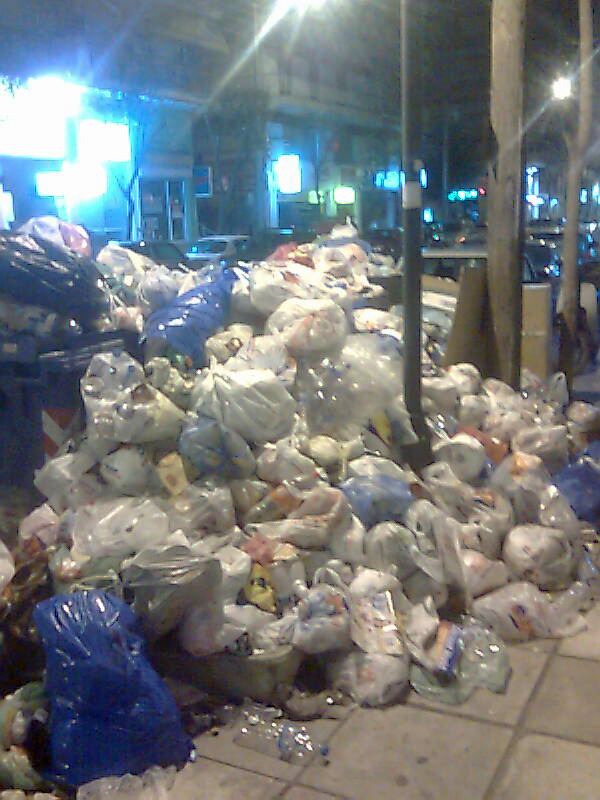
Note from Jay: I took the above photos. They are of Thessaloniki were Steve and I teach. They offer you lots to consider about the failings of local government.
 ELTvisa
I’m a native speaker of English and a linguistics graduate, but I really don’t know what “Kick Ass Ecology” means. Will any non-native speakers understand this?
LikeLike
Hi Bill! Thanks for commenting, While I can’t speak for the author, I would say that’s a good question to have your students answer, if of course, you use the article with them. Perhaps, like poetry, it’s for the reader to make something of what he or she reads. Also, why would you differentiate between native and non-native teacher in this respect?
LikeLike
I am not a native speaker, but I am a teacher of English. I understand both the expression, kick-ass, and the title of the article. I don’t see any problem with it. It might not be in the dictionary, but you can look it up on http://www.urbandictionary.com, as I would tell my students to do.
LikeLike
Pingback: SIDEWALK FAIL: An Exercise In Citizen Journalism And Civic Responsibility | ELT Vista